
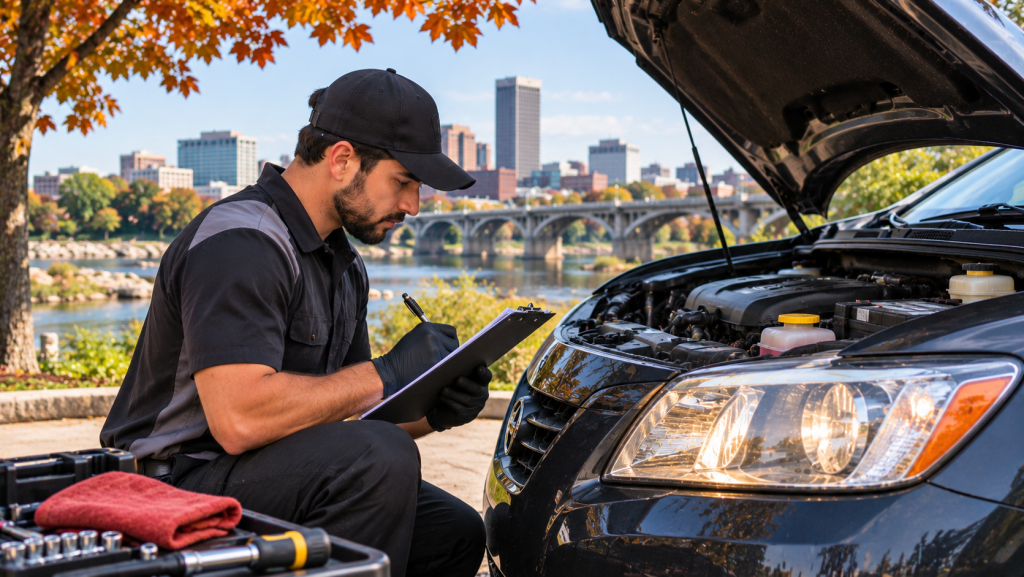
For many San Antonio families, the holidays mean a long drive. You load the car with gifts, bags and maybe a few kids, and head out to see family for Thanksgiving or Christmas. It is a great tradition, and also one of the busiest times on the road. Heavy traffic, long stretches at highway speed and a car packed with weight put extra strain on a vehicle that may have been used mostly for short local trips. A little preparation a week or so before you leave can prevent a breakdown that would ruin the visit. This guide gives you a practical inspection checklist for a holiday road trip, covering tires, the battery, brakes, fluids, wipers, lights, belts, heating and cooling, an emergency kit and smart habits for the drive. It also covers warning signs that mean you should stop and how a mobile mechanic in San Antonio can help you get ready.
Why Do an Inspection Before a Long Drive
A long trip is a different kind of test than daily driving. The car runs for hours at steady speed, which can reveal problems that stay hidden around town. A tire that is slightly low can overheat. A battery that works on short trips can fail after a cold night at a relative’s house. A leak that drips a little each day can leave you low on fluid halfway there. Finding these problems at home, a few days before you go, gives you time to fix them. Finding them on a highway shoulder on a holiday weekend means a long wait and a ruined plan.
When to Do It
Aim to do your inspection a week or so before you travel. That leaves time to schedule repairs, order parts and recheck anything that was fixed. Waiting until the day before leaves little room if you find a problem, and many shops are busy or closed on holiday weekends. Check again on the morning you leave, when you can look at the tires and fluids quickly while you load the car.
Tires
Tires carry the whole load, so they come first.
- Pressure. Check all four tires, plus the spare, when they are cold. Use the pressure on the door jamb sticker or in your owner’s manual. A fully loaded car may call for different pressure, so check what the manual says.
- Tread. Look at the wear bars in the grooves, or use a tread depth gauge. Worn tires are less safe, especially on wet roads.
- Condition. Look for cuts, bulges, cracks, nails and uneven wear. Uneven wear can point to alignment or suspension problems.
- The spare and tools. Make sure the spare is inflated, and that the jack, lug wrench and any locking wheel nut key are in the car.
Battery
A weak battery may start the car at home and fail at the first stop. Signs include slow cranking, dim lights, a battery warning light, corrosion on the terminals and an older battery. A technician can test the battery and charging system in a few minutes. This matters even more if the destination is colder than San Antonio, since cold makes starting harder. Keep jumper cables or a jump starter in the trunk.
Brakes
You will be braking in heavy traffic, with a heavier load, so brakes need to be in good shape. Watch for squealing, grinding, a soft or sinking pedal, pulling to one side, vibration when stopping and a brake warning light. Brakes are a safety system, so repairs belong with a qualified technician. If the pedal ever feels wrong while you are driving, slow down safely, pull over when you can and do not keep driving as usual.
Fluids and Under the Hood
- Engine oil. Check the level and condition, and make sure you are not overdue for service. A long trip is a good reason to change the oil before you go, according to your owner’s manual.
- Coolant. Check the level when the engine is cool, never the radiator cap on a hot engine, and use the type your manufacturer specifies.
- Brake fluid and power steering fluid. Look at the reservoirs and follow your owner’s manual.
- Washer fluid. Fill it up, since highway bugs and road spray use a lot.
- Leaks. Look under the car after it has been parked for fresh spots.
- Belts and hoses. Look for cracks, fraying, glazing, bulges and soft spots.
Wipers, Lights and Glass
- Replace wiper blades that streak, skip or are cracked.
- Test headlights, high beams, brake lights, turn signals and hazard lights, and clean the lenses.
- Look at the windshield for chips and cracks, since they can spread on a long drive.
- Make sure the mirrors are adjusted and clean.
Heating, Cooling and Air Conditioning
Holiday weather can swing a lot between San Antonio and your destination, so you may need both heat and air conditioning on the same trip. A weak defroster is a safety issue on cold mornings, and a weak air conditioner can make a long drive tiring on warm days. If the air does not feel right, our post on car AC maintenance tips covers what to watch for. Test the heater, the defroster and the air conditioning before you leave.
Check the Load
A packed car handles differently from an empty one.
- Check your owner’s manual for the maximum load, and look at the label on the driver’s door jamb.
- Distribute weight evenly, with heavy items low and centered.
- Keep the rear window and mirrors clear so you can see.
- Secure loose items. Anything loose can become a danger in a sudden stop.
- If you use a roof carrier or a hitch carrier, follow its instructions and your manual’s limits.
- Adjust tire pressure if your manual says to, and expect longer stopping distances.
Pack an Emergency Kit
- Water and snacks, for everyone in the car.
- A phone charger or power bank.
- A flashlight with fresh batteries.
- Jumper cables or a jump starter.
- A tire pressure gauge, and the spare, jack and tools.
- Reflective triangles or flares, and a first aid kit.
- Blankets and warm clothes, since the weather may be colder than at home.
- Paper copies of key information, such as insurance and roadside assistance numbers.
- Extra washer fluid.
- Any items kids or pets need, such as medicine, snacks and toys.
Smart Habits for the Drive
- Start rested. Do not begin a long drive after a night of packing and little sleep.
- Take breaks. Stop every couple of hours to stretch, check on everyone and look at how the car feels.
- Share the driving if you can.
- Fill the tank before it gets low. Stations can be crowded or far apart on holiday weekends.
- Check the route and weather before you leave and along the way.
- Leave extra space and avoid sudden braking, since holiday traffic can stop quickly.
- Watch the gauges and warning lights. Notice changes early.
- Avoid distractions, especially phones.
- Tell someone your route and when you expect to arrive.
Stop Driving If You Notice
- A brake warning light, a soft pedal or brakes that stop responding normally.
- Steam, a temperature warning or a burning smell.
- An oil pressure warning light.
- A flashing check engine light.
- Steering that suddenly feels loose or heavy.
- A tire that looks flat or damaged, or a strong vibration.
- Any smell of exhaust fumes inside the cabin.
Pull over in a safe place as soon as you can and get help instead of pushing on. Your owner’s manual explains what each warning light means for your vehicle.
A Ten Minute Walk Around Before You Leave
- Look at all four tires and the spare, and check the pressure.
- Check the oil, coolant and washer fluid levels.
- Look under the car for fresh leaks.
- Start the car and watch the dashboard for warning lights.
- Test the lights, wipers and horn.
- Test the heat and air conditioning.
- Check that the load is secure and your view is clear.
- Fuel up, and pack your emergency kit.
How a Mobile Mechanic Can Help
A mobile mechanic can come to your home or workplace in San Antonio and do a pre trip inspection where the car is parked. That can include a tire check, a battery and charging test, a brake inspection, a look at fluids, belts and hoses, a check of the lights and wipers, a look at the heating and cooling and small repairs such as bulbs, wiper blades and an oil change. It saves you a trip to a shop in the busiest travel season. Some jobs, such as tire mounting, alignment and larger brake or suspension repairs, may need a shop with specialized equipment, and a good technician will tell you honestly which jobs those are. Book early, since the days before holidays fill up quickly.
Quick Summary
- Do your inspection a week or so before you leave, so there is time for repairs.
- Check tires, including the spare, the battery, brakes, fluids, belts and hoses.
- Replace worn wipers, test every light and check the heater, defroster and air conditioning.
- Check your load against the owner’s manual, and secure it.
- Pack an emergency kit, and plan fuel stops and breaks.
- Stop driving for brake, overheating, oil pressure, steering or tire trouble.
A little preparation makes the drive safer and the holiday more relaxing. If you would like help getting your car ready, visit the Mobile Mechanics of San Antonio homepage to learn more, or contact us to schedule a visit before you hit the road.